What I Learned at the Planning Commissioners Academy: Housing Law, Ethics, and CEQA in Practice
500+ housing bills, yet housing production hasn't grown meaningfully. I attended the Planning Commissioners Academy to understand the state housing playbook, ethics rules, and CEQA mechanics shaping development—and what it means for East Palo Alto.

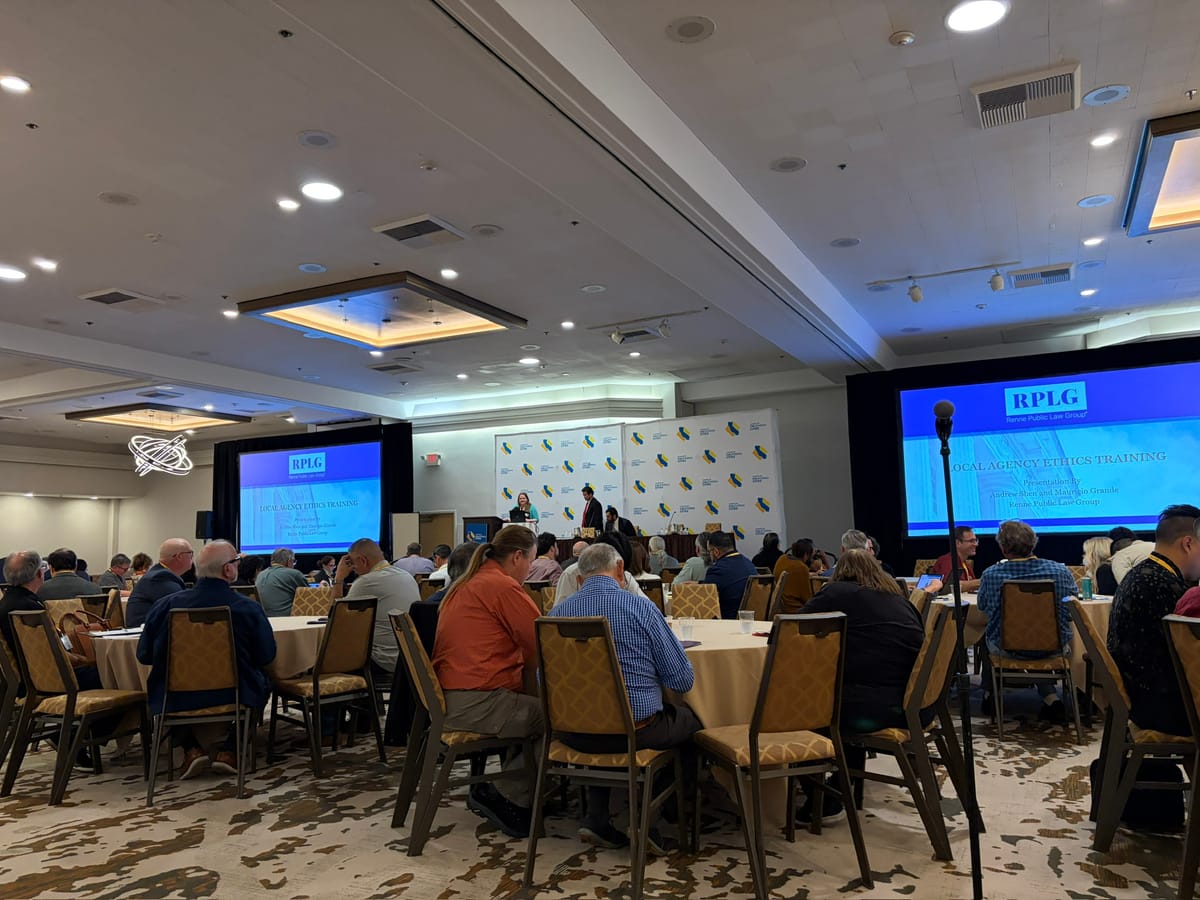
When the California Planning Commissioners Association held the Planning Commissioners Academy earlier this year, I knew I had to attend. As a member of East Palo Alto's Planning Commission, I wanted to understand the bigger picture—the state-level pressures, the legal frameworks, and the common challenges that planning commissions across California face. What I found was both sobering and clarifying.
The Housing Legislation "Playbook"
Over the past decade, California has passed roughly 500 housing bills. You'd think that would mean a dramatic increase in housing production. But the numbers tell a different story: overall housing production hasn't increased meaningfully. What has increased is affordable housing, which suggests the bills are working—just not in the way legislators may have hoped.
The "playbook" that developers and cities have learned to navigate looks like this:
- SB 330 freezes local zoning legislation at the time an application is submitted, preventing a city from changing the rules mid-project.
- Density Bonus Law has become the most-used tool, though it's somewhat misnamed. Developers primarily use it not for density itself, but for waivers and concessions—exemptions from parking requirements, setback reductions, and other standards. It predates most recent laws but was revised with a density boost.
- Housing Accountability Act (including AB 130) limits the grounds on which a project can be rejected and reduces CEQA exposure, tightening the timeline for approval and shrinking opportunities for delay tactics.
This playbook is not theoretical. We saw it play out locally with the Four Corners project recently. It's an undeniable reality of modern development that planning commissions must understand.
The real challenge? Despite these tools, we haven't solved the underlying problem. More deed-restricted affordable housing, more low-cost ADUs, more affordability requirements—these are real wins. But they haven't translated into the volume of housing we need. Lawmakers are beginning to recognize this and are shifting focus toward the real bottleneck: financing and the cost of construction.
Ethics and Compliance: What Every Commissioner Must Know
The training made clear that being a planning commissioner comes with serious legal and ethical responsibilities. Here are the key takeaways:
Form 700 and Conflicts: Every commissioner must file a Form 700, which inventories potential conflicts of interest. It's publicly available, so treat it seriously.
Gift Limits and Travel: Public officers cannot accept free travel or airline upgrades from transportation companies. If you're running for office while on the planning commission, you can receive up to $500 in gifts within any 12-month period. Interestingly, wedding gifts have no monetary limit—but you still must report them.
Public Records and the Dais: Be extremely careful about texting while sitting on the dais during a meeting. Someone can file a public records request if they suspect you're communicating with staff or other commissioners to inform your decision. Similarly, one-on-one conversations on social media with other commissioners can violate the Brown Act.
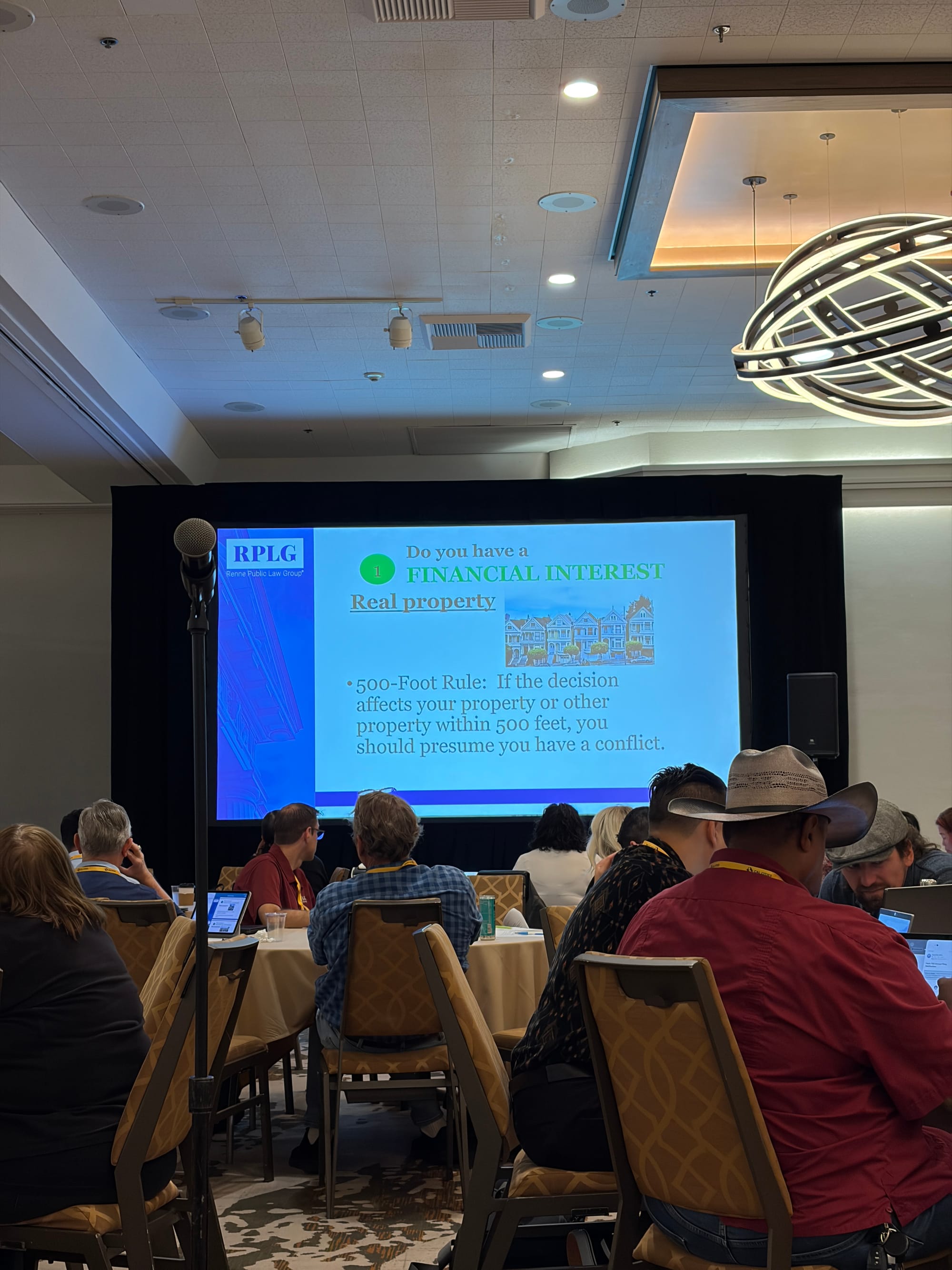
Recusal Distance: The standard recusal threshold is 500 feet of ownership interest. But questions arise—does an HOA common-area ownership extend that distance? These nuances matter, and checking with planning staff or the planning clerk before a meeting is wise.
Public Records Requests: If someone wants documents from the planning commission, the request can go directly to a commissioner, but it's best practice to loop in planning staff or the planning clerk.
CEQA in Practice: More Complex Than You Think
Environmental review (CEQA—the California Environmental Quality Act) was a major focus of the training. The mechanics are deceptively complex.
Categorical Exemptions: Projects may be categorically exempt from full environmental review, but "exempt" doesn't mean no documentation. The applicant must still submit a thick packet proving they meet exemption criteria—no historical significance, no protected habitat, etc.
Thresholds and Mitigation: CEQA doesn't look at worst-case scenarios. Instead, it establishes a baseline, sets thresholds, and then applies mitigation measures if a project exceeds those thresholds. These thresholds vary: transportation policies have their own, municipal code has noise thresholds, engineering standards define others.
How Developers Game CEQA: One common tactic is to propose the maximum feasible unit count, then "compromise" by reducing units and adding open space in exchange. On its face, it sounds like a concession. But it's baked into the development strategy from the start.
Project Design Features: Developers often design features into a project specifically to reduce environmental impact—parking reductions, stormwater management, building orientation for passive solar gain. These are called Project Design Features (PDFs). The problem? Planning staff may not communicate these to the building department, and they can vanish by the time construction begins. Our staff report conditions of approval should explicitly reference PDFs so they can't get lost.
AB 130's 60-Day Clock: Once planning staff deems an application complete, a 60-day approval clock starts ticking. Cities can develop objective design standards to streamline review and stay within this timeline without sacrificing judgment.
Transit, Parking, and Walkability
One of the keynote speakers raised a provocative point: he lives in a 40-story San Diego building with excellent transit access—and he's the only resident who doesn't own a car. Why? Because transit ridership correlates more strongly with income than with proximity to transit. The implication is sobering: even perfect urban planning can't force people to abandon their cars if they can afford not to.
That said, planning commissioners do have levers for promoting walkability and transit-friendly design. At the plan level (through specific plans and design standards), we can promote the idea that two or three walkable blocks matter—they're a Vehicle Miles Traveled (VMT) win and a lifestyle win. It's indirect, but measurable.
We don't directly control transit service (that's the transit agency's job) or whether people choose to ride it. But we shape the physical environment in ways that make transit and walking more viable.
Other Insights Worth Noting
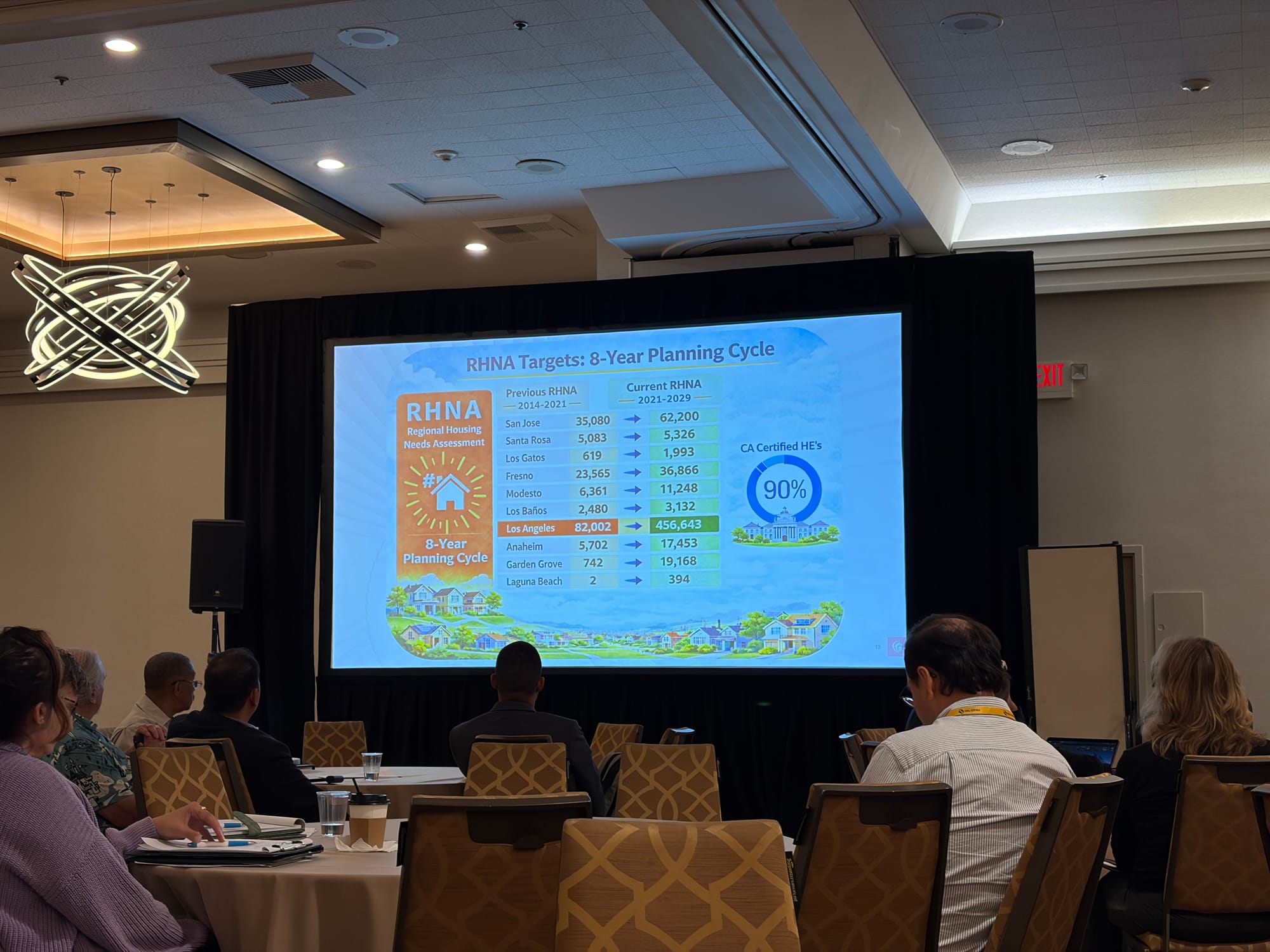
RHNA and Staff Reports: Regional Housing Needs Allocation (RHNA) numbers should appear in staff reports and explicitly tie proposed projects to regional housing goals. This isn't just bookkeeping—it's part of the narrative that justifies approval.
Revocation Hearings: These are rare but serious proceedings where a council might ask to reconsider a previously approved project. Understanding the process is important for commissioners who want to protect their decisions.
Tres Hermanos Conservation Authority: A multi-city land-ownership case study involving Chino Hills, Diamond Bar, and City of Industry. It's an example of how smaller municipalities can cooperate on shared environmental challenges.
The Builder's Remedy: This provision is primarily used in high-end markets where developers can force approval of projects if a city doesn't have an adequate housing plan. It's another pressure point that justifies approving housing when it's genuinely available.
California Exodus to Other States: Developers are actively choosing to build housing in Phoenix and Las Vegas instead of California specifically to avoid CEQA costs and timelines. That's Californians' housing moving out of state—a sign we've made development too difficult.
For East Palo Alto's Planning Commission
The Academy reinforced that we're not alone in facing these pressures. Every planning commission in California is navigating the same complex web of state housing mandates, CEQA requirements, ethics rules, and fiscal pressures. The difference is in how thoughtfully we engage with them.
For East Palo Alto, the takeaway is this: We need to understand the state's housing playbook, follow our ethics obligations meticulously, streamline CEQA review where possible, and stay focused on walkability and transit-supportive design. We're part of a much larger conversation about how to make California housing-abundant without sacrificing environmental review or good governance.
The Planning Commissioners Academy made clear that there's no simple solution. But there's also no excuse for ignorance. Understanding the landscape is the first step toward making better decisions.
Appendix
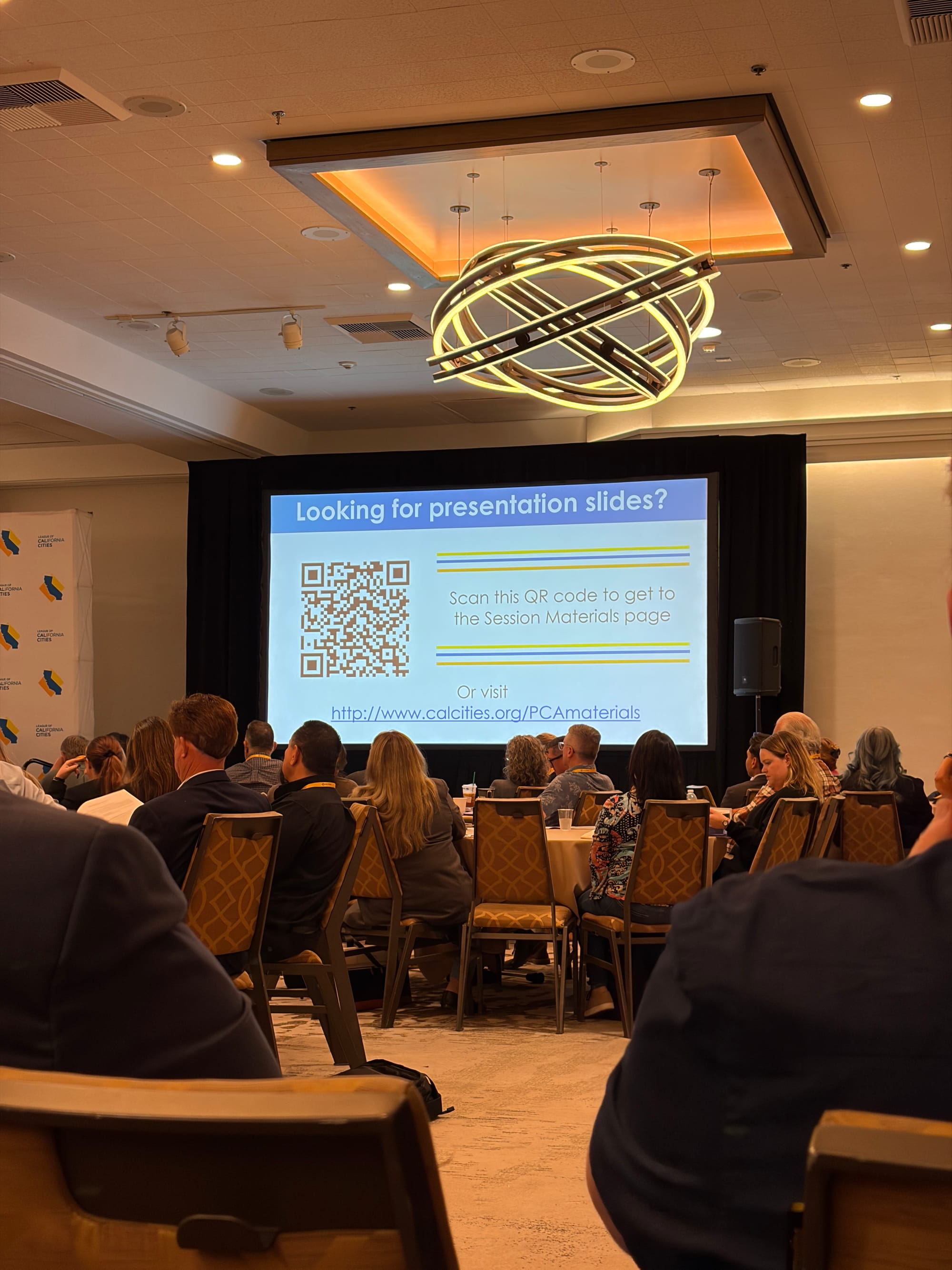
If you're curious to view the slides, you can find them here: http://www.calcities.org/PCAmaterials.